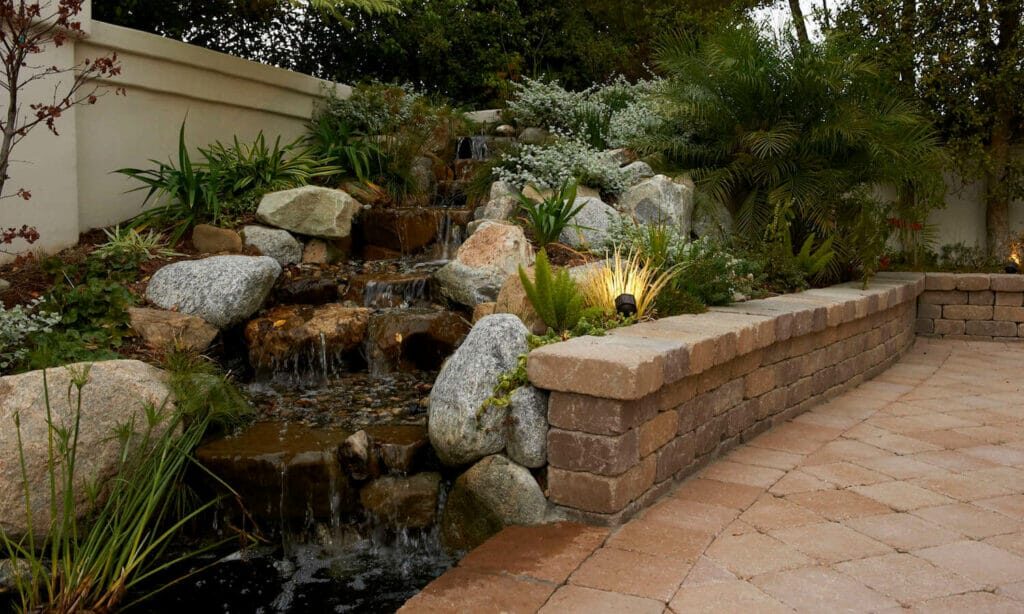
Terraced stone retaining wall holding back a sloped, planted backyard
Avalon/Landscape/Erosion Control

Erosion Control

Stop losing soil, protect your foundation, and keep the landscape you invested in. Retaining walls, drainage, matting, and grading — engineered to fix the cause, not just the symptom.

What we offer
  • Retaining Walls
  • French Drains
  • Erosion Matting
  • Rip Rap
  • Regrading & Silt Fencing
§ 01 · Why It Matters

Erosion doesn’t stay small.

A little bare dirt on a slope looks harmless. Left alone, that same spot loses more topsoil with every storm, undermines whatever is planted or built nearby, and sends mud and sediment toward your foundation, driveway, or neighbor’s yard.

The good news: erosion almost always has an identifiable cause — usually water moving somewhere it shouldn’t. Fix that, and the problem stops permanently instead of returning every spring.
§ 02 · Signs To Watch For
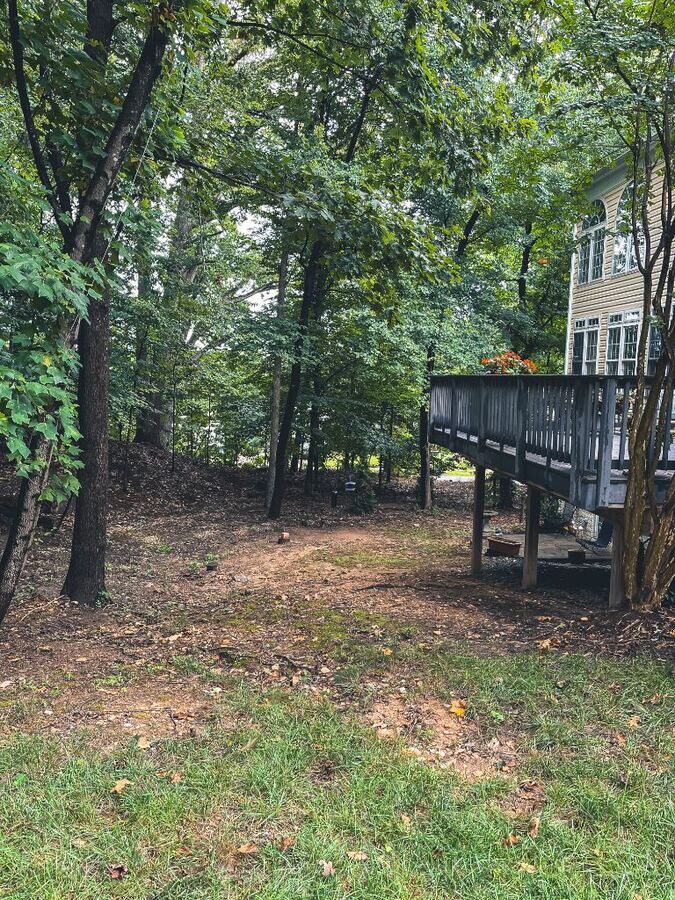
Before: bare dirt path under a deck with no grass or drainage establishedBefore
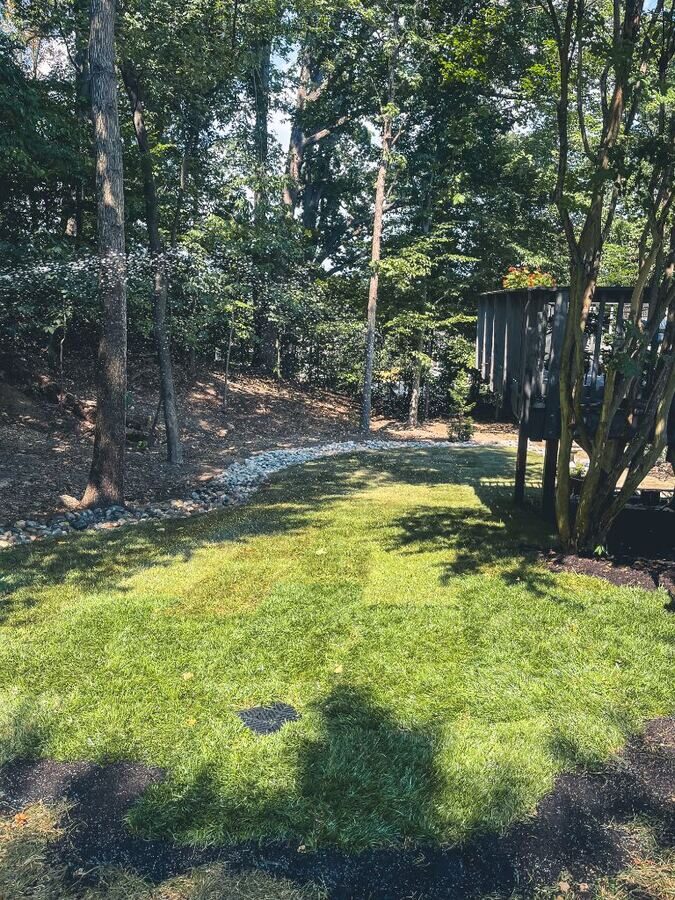
After: healthy established lawn with a river-rock drainage swale along the treelineAfter

One Avalon project, two outcomes.

  • Bare or Thinning PatchesGrass struggles or won’t take on a slope, leaving soil exposed.
  • Rills & ChannelsSmall grooves cut into the ground after rain — an early, easy-to-fix warning sign.
  • Exposed Roots or FootingsSoil has washed away from the base of a tree, wall, or fence post.
  • Muddy Runoff Near the HouseSediment pooling at the foundation, driveway, or walkway after storms.
  • Sediment Buildup DownhillSilt collecting at the bottom of a slope means soil is actively migrating from the top.
§ 03 · Techniques We Use

The right fix depends on the cause.

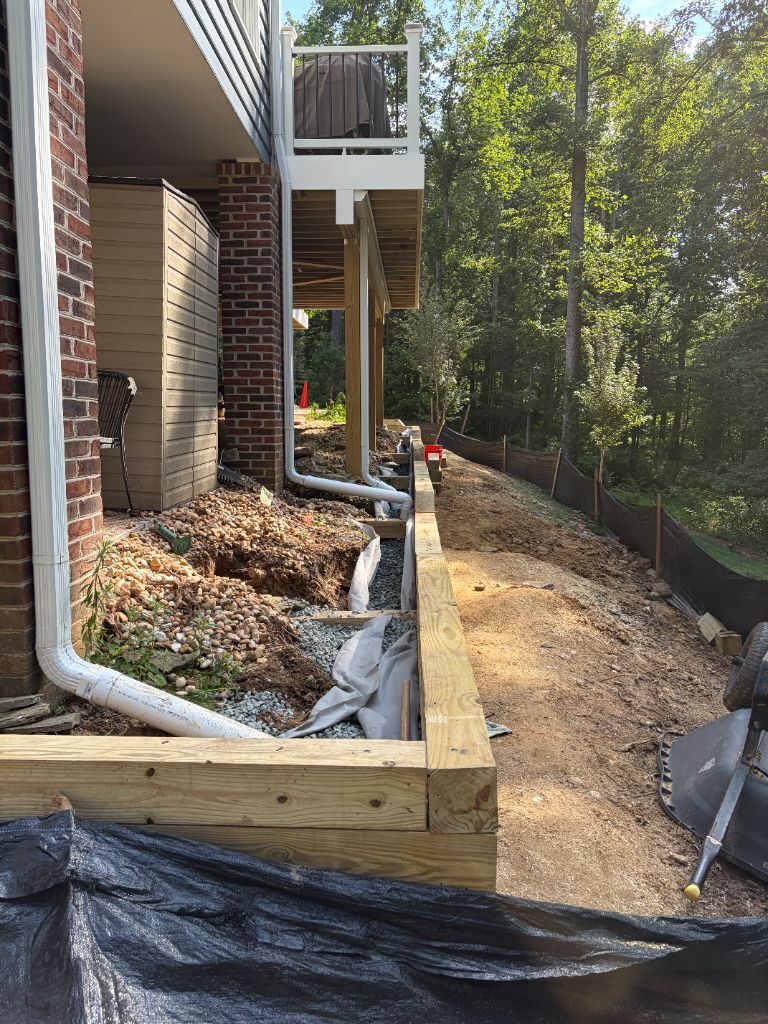
Avalon crew building a timber retaining wall along a sloped side yard, with drainage gravel and pipe installed behind it
01

RETAINING WALLS

The most permanent fix for a sloped or terraced yard. A properly engineered wall — with drainage gravel and a compacted base behind it — holds soil in place for decades, not seasons.
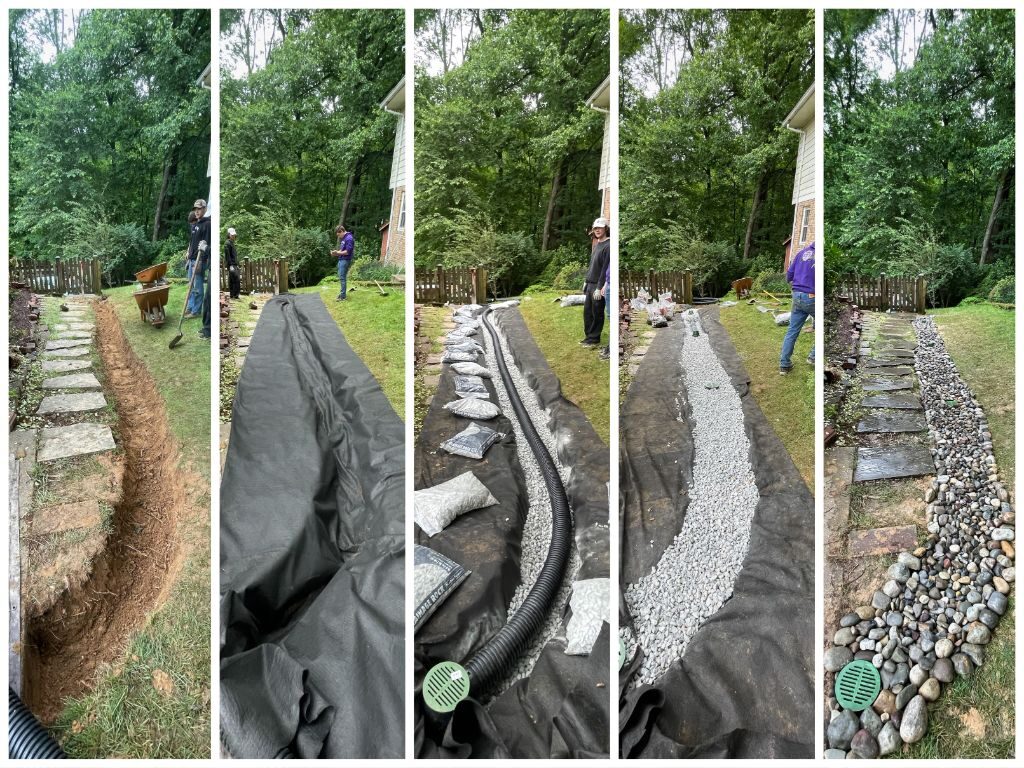
Avalon crew installing a French drain: trench excavation, fabric liner, perforated pipe and gravel, finished with a river rock dry creek bed walkway
02

FRENCH DRAINS

Most erosion is really a water problem. A French drain intercepts groundwater before it ever reaches the surface, routing it safely away in a gravel-and-pipe trench wrapped in fabric to keep it from clogging.
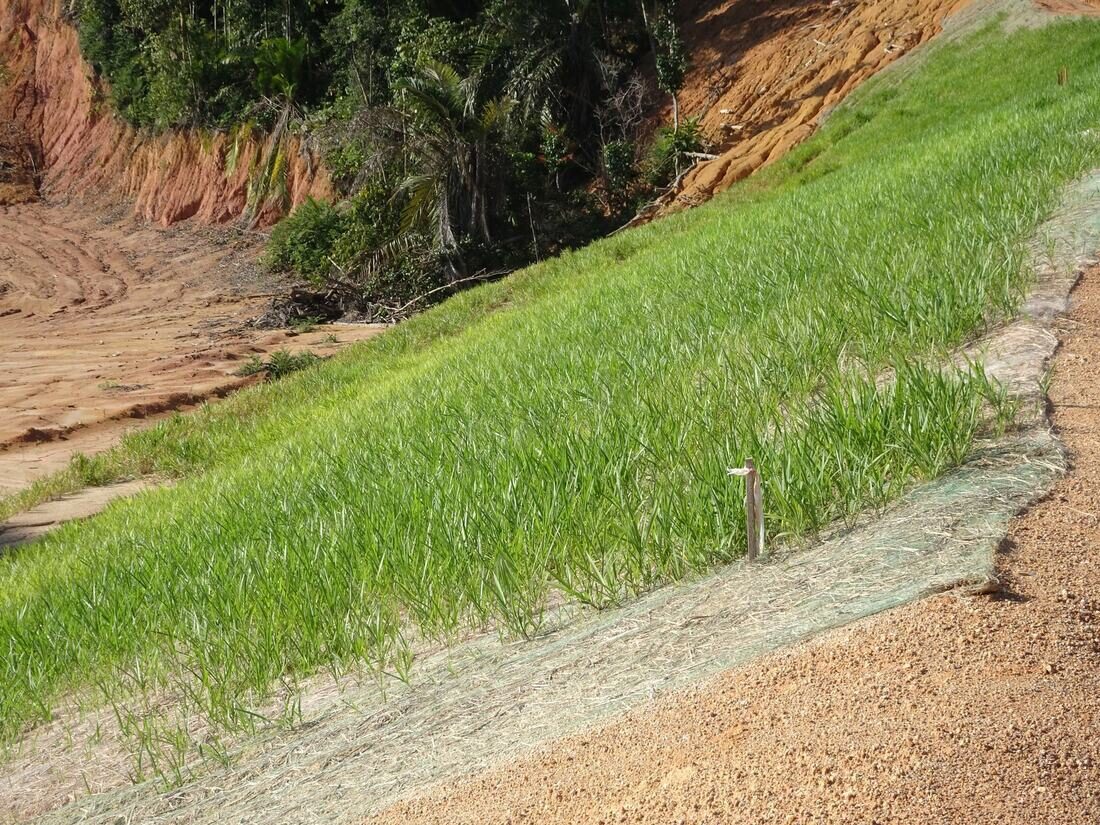
Green erosion control matting laid over a bare slope with new grass growing through
03

EROSION CONTROL MATTING

For slopes that just need time to establish new turf, a biodegradable matting or blanket holds soil and seed in place against wind and rain until roots take over the job permanently.
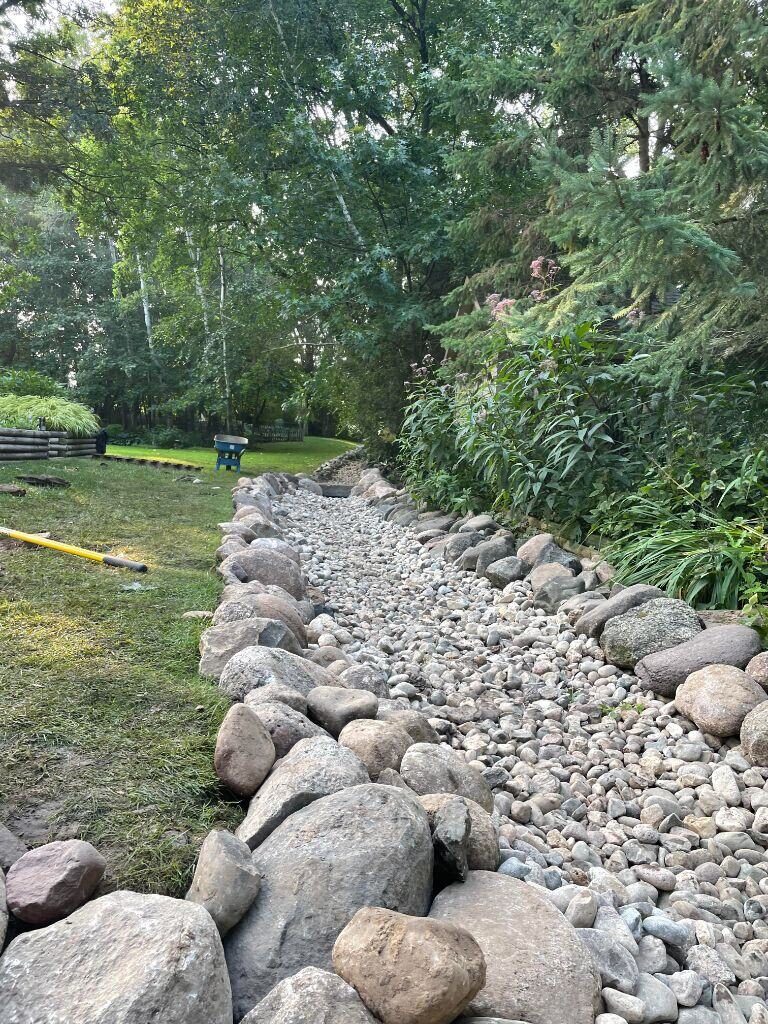
A long boulder-lined rip rap drainage channel curving through a wooded backyard, carrying water safely past mature trees and plantings
04

RIP RAP & DRAINAGE CHANNELS

Where water concentrates — downspout outlets, low points, streambanks — loose stone rip rap absorbs the energy of moving water so it can’t carve a channel through your yard.
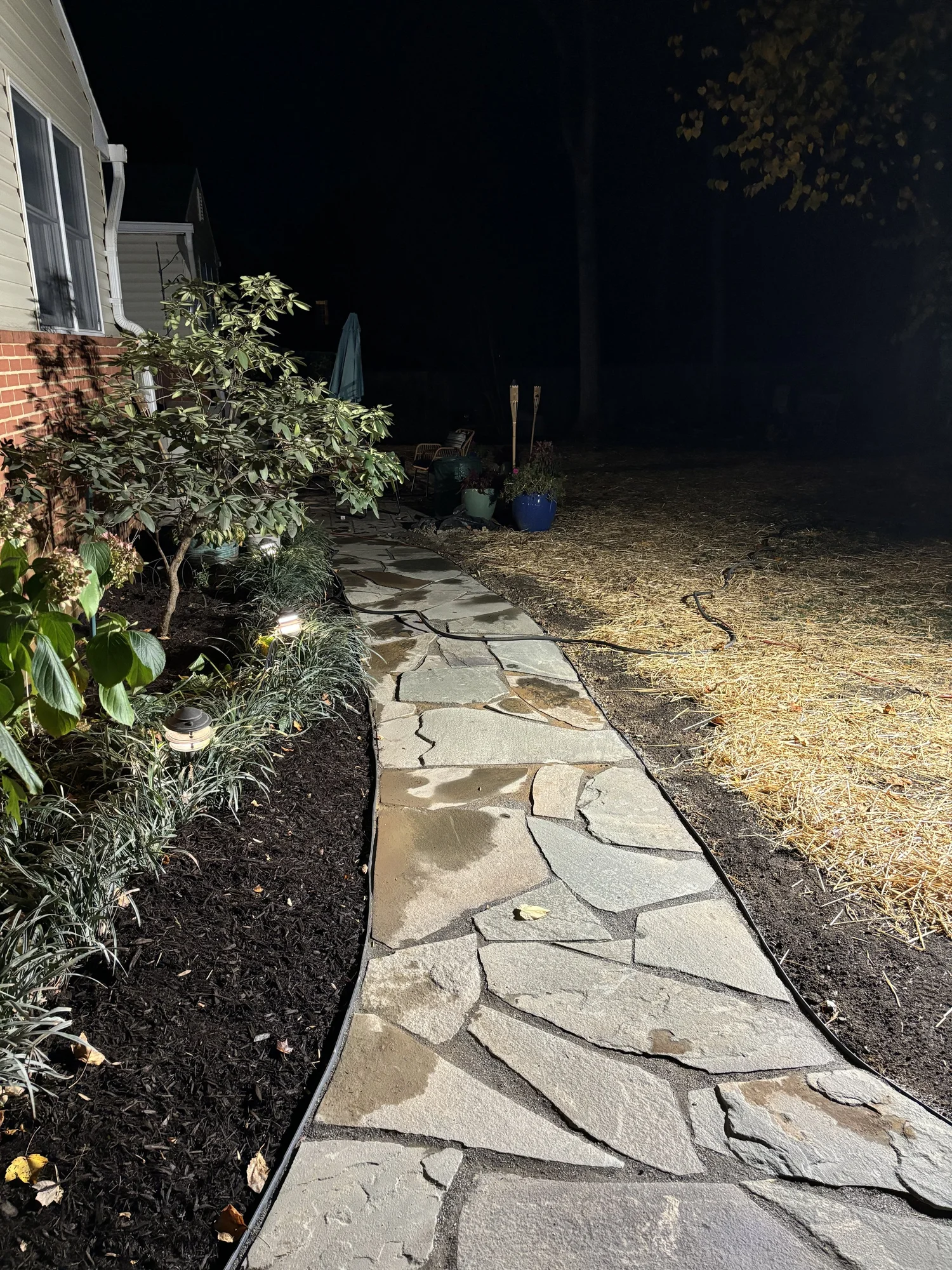
Freshly graded yard with proper slope away from the home
05

REGRADING & SILT FENCING

Sometimes the fix starts with the dirt itself. We correct grade so water sheds away from your home and foundations, and install silt fencing to contain soil during active construction.

§ 04 · How We Approach A Project
01
Step One
Site Walk & Water Path
We walk the property with you and trace exactly where water travels during a storm — the real cause of most erosion.
02
Step Two
Diagnosis & Plan
A written proposal recommending the right fix (or combination): drainage, grading, matting, or hardscape.
03
Step Three
Install
Our own crews build it — proper base, proper pipe slope, proper compaction. No shortcuts that fail in year two.
04
Step Four
Stabilize
Seed, sod, or plantings re-establish ground cover so the fix keeps working long after we leave.
→
Ongoing
Inspect & Maintain
Seasonal check-ins to clear drains and confirm the grade is still doing its job.
§ 05 · Common Questions

What homeowners usually ask us.

How do I know if I actually have an erosion problem?
Common warning signs include bare or thinning patches on a slope, small channels or "rills" cut into the soil after rain, exposed roots or the base of retaining walls, muddy runoff pooling near your foundation or driveway, and sediment building up at the bottom of a hill. If you notice any of these after a heavy rain, it is worth a site visit before it gets worse.
Why is my yard eroding if I already have grass?
Grass alone often is not enough on a moderate-to-steep slope, in shaded areas where turf struggles to establish, or wherever water concentrates into a path — like below a downspout or a low point in the yard. In those spots, water moves faster than roots can hold soil, and a drainage or grading fix is usually needed underneath or alongside the turf.
What is the difference between a French drain and a retaining wall?
A French drain manages water — it collects groundwater and redirects it before it saturates the soil and causes movement. A retaining wall manages soil — it physically holds back earth on a slope so it cannot slide or wash away. Many projects need both: a wall to hold the grade, with a French drain behind it to relieve water pressure so the wall itself does not fail.
How much does erosion control typically cost?
It depends entirely on the cause and the scope of the fix. A short French drain run is a very different project than a multi-tier retaining wall system or a full regrade. We provide a free, no-pressure site visit and a detailed written proposal so you know exactly what is included before you commit to anything.
Will erosion control damage my existing landscaping?
We plan every install to minimize disruption to established plants, trees, and turf, and we restore any disturbed areas — reseeding, replanting, or resodding — as part of the job. If a specific area is important to you, tell us during the site visit and we will design around it wherever possible.
How long does an erosion control project take?
A single French drain or small matting install is often a one-to-two day job. Retaining wall systems, full regrading, or multi-technique projects typically run from several days to a couple of weeks depending on scope. Your written proposal will include a realistic timeline before work begins.

Stop the erosion. Protect your investment.

Request Free Estimate